
The decision this guide helps you make
End-of-day reconciliation compares recorded sales, tender totals, returns, fees and provider settlements using agreed references and timing. A settlement may cover a different period from the till session.
Separate sales, cash, refunds, card payments and provider transfers, then assign an investigation route for differences instead of forcing totals to agree.
Define the reporting cut-off, expected totals, unresolved transaction handling and finance review. Keep sales, payment authorisation and bank settlement distinguishable.
A practical example to test the choice
A payment provider’s combined payout is lower than card sales because of fees or refunds. The difference needs an explanation, not an automatic change to sales figures.
This is an illustrative planning scenario, not a claim about a completed client project. Use your own records and operating rules to confirm whether the approach fits.
Define the period and the figures being compared
An end-of-day check needs a clear session, location and reporting period. Sales value, cash in a drawer, card payments and provider transfers represent different things. A difference may reflect timing, refunds or charges rather than a missing sale, so identify each figure before attempting to reconcile it.
Square’s close-of-day guidance explains how its configured time affects grouping and sending payments. That is an example of a provider-specific timing rule, not a universal accounting period. Confirm the actual report boundaries and transfer arrangements with the systems and finance owner involved.
Record cash movements and exceptions
Agree how starting cash, cash sales, refunds, paid-in or paid-out amounts and the final physical count are recorded. Shopify’s cash-tracking reports describe expected and counted values within its register sessions. Verify the features and permissions available on the intended account.
A discrepancy needs an explanation and owner rather than an arbitrary adjustment to reach the expected number. Check late refunds, incorrect tender selection, unfinished transactions and timing across locations. Keep the review proportionate and use the business’s approved procedures for handling cash and financial records.
Connect the operational check to finance
Have the responsible finance person define which reports and provider records support the close. If accounting is integrated, test how corrections and delayed settlements appear in both places. Do not interpret a successful transfer of records as proof that their values have been reconciled.
Document who prepares, reviews and resolves the close, including absence cover and the hand-off for unresolved items. Test the procedure using a realistic mix of transactions before rollout. Staff need a clear path for an exception even when the reporting interface itself is simple.
Build a reconciliation exception register
For each unmatched figure, record the period, system, transaction or movement reference and responsible reviewer. Separate a suspected timing difference from a confirmed incorrect entry. Link corrections to the reviewed item rather than changing figures without explanation. Agree when an unresolved item is escalated and how its resolution appears in later reporting. The register complements provider reports by making the business’s investigation and ownership explicit, especially when several branches or payment channels contribute to a daily total.
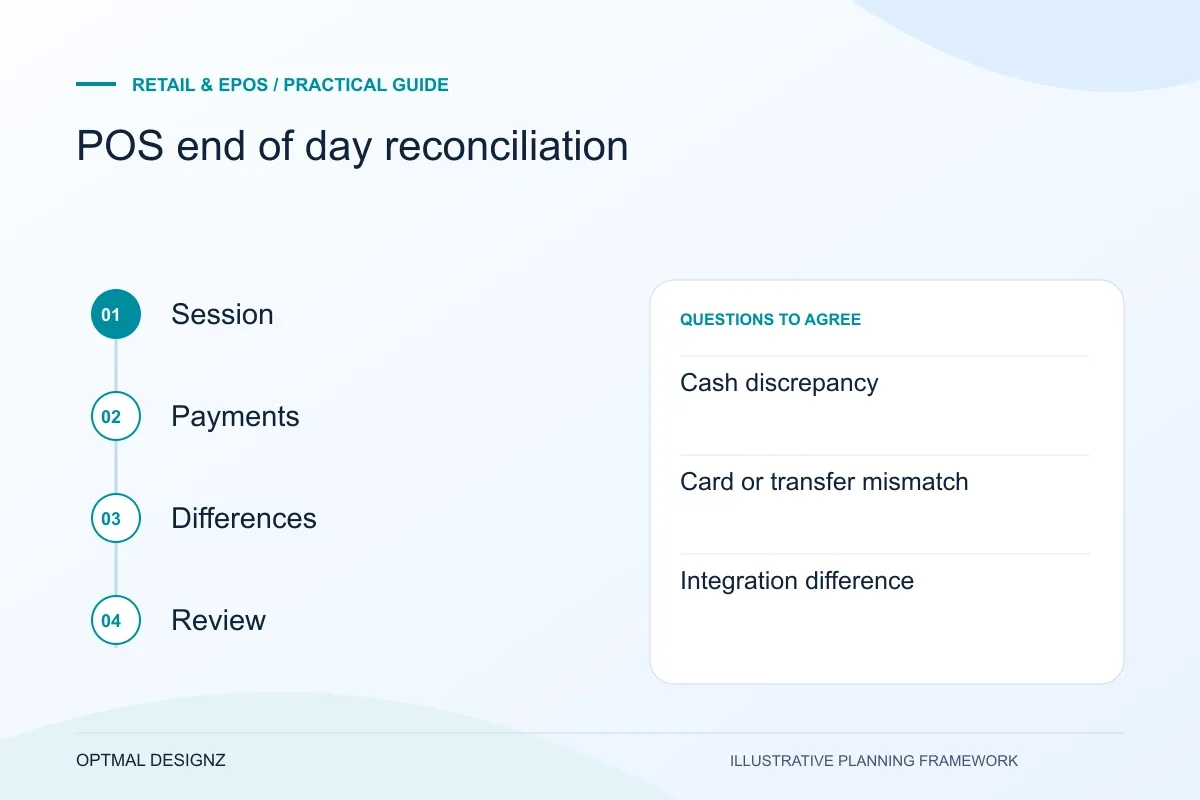
| Difference type | Next check |
|---|---|
| Cash discrepancy | Drawer movements and physical count |
| Card or transfer mismatch | Provider period, status and relevant adjustments |
| Integration difference | Source and destination records with correction history |
Worked example: a planning exercise
Hypothetical example: a late card refund falls into a different provider grouping from the original sale. A manager compares the till’s sales report directly with the next bank transfer and sees a mismatch. The reconciliation procedure separates the periods and payment states, with the finance reviewer confirming the expected treatment instead of changing the sales record.
Your practical checklist
Use these checks to turn the discussion into decisions that can be assigned, tested and reviewed.
- Define the session, location and time boundaries.
- Distinguish sales, cash, card payments and provider transfers.
- Record starting cash and non-sale drawer movements.
- Review refunds, unfinished transactions and timing differences.
- Agree the reports and correction rules with finance.
- Assign preparation, review and unresolved-item ownership.
Apply the checklist to your UK project
Use the actual UK store, provider account and device models. Follow a sale, return and reconciliation through every affected system rather than relying on a generic till demonstration.
Use the example above to discuss pos end of day reconciliation with the people who will use or approve the result. Ask a supplier to demonstrate the expected output, explain a failure case and identify what is excluded from the proposal.
Related services and next steps
Sources and further reading
Check source guidance directly, especially where platform details or requirements can change.