
Operational applications
Manage requests, jobs, orders and approvals with clear ownership and a visible next action.
Custom software development creates an application for the way your organisation actually works. Instead of adapting every process to a packaged product, we build the agreed records, screens, permissions and workflows around the tasks your staff or customers need to complete.

For teams relying on repeated spreadsheet work, disconnected tools or manual hand-offs that an existing product cannot reasonably handle.
Manage requests, jobs, orders and approvals with clear ownership and a visible next action.
Give authorised users access to the records and actions relevant to them.
Exchange approved information with existing accounting, CRM, stock or other supported systems.
Use agreed data definitions, role permissions, audit events and exception queues to keep work understandable.
A distributor could turn an emailed order request into a reviewed order with customer-specific pricing, stock checks and an approval trail before it reaches fulfilment.
This describes a possible scope, not a claimed client result.An agreed first-release scope, interface designs, working application, relevant integrations, documented tests and deployment handover. Hosting, source access, maintenance and third-party charges are set out in the proposal.
Compare a packaged product, configuration and a focused integration first. Bespoke software is most useful when the important workflow genuinely requires a different approach.
For a UK team, start with one complete customer or staff task and identify every system involved. Confirm access, migration ownership, review availability and ongoing operating responsibilities before fixing the delivery plan.
Optimal Designz is operated by Optimal Design Solutions SMC-PVT Ltd., registered in Pakistan. Delivery arrangements, supported languages, system compatibility and ongoing support are confirmed in the written scope; this country edition does not imply a local office.
Have a similar task in mind? Share your current tools, the people involved and one complete example.
Discuss this requirementSee the capabilities, workflows and delivery choices behind the service. Start with the work you need to complete.
Begin with the people, processes and systems involved. These details help define what the work needs to support.

Custom software may be worth exploring when work depends on spreadsheets, disconnected tools, repeated manual entry, unique business rules or customer experiences that standard products cannot provide. It is not automatically the best choice: discovery should compare custom development with configuration, integration and off-the-shelf options.
A customised software development brief should describe one task from beginning to end, including approvals, delays and the work people do outside the main system. For example, an order process may need to connect a customer request, a stock check and an authorised price before an invoice can be raised. This is an illustrative workflow, not a claim about a completed client project.

Depending on scope, projects may include web applications, customer portals, staff portals, workflow platforms, internal tools, reporting systems, SaaS products, booking applications and database-driven business systems.
The useful question is what each user needs to complete. A customer portal might show request status and collect missing documents; an internal tool might assign work, validate records and make overdue actions visible. Those journeys determine the features, rather than adding a dashboard or app simply because it is possible.

We identify user roles, business rules, data sources, workflows, integrations, constraints and acceptance criteria. This helps clarify what the first release needs to do and what can be deferred.
Define what a successful task looks like with sample inputs and expected results. Agree what happens with missing information, duplicate records, rejected approvals and absent staff. These examples become acceptance criteria, so both the business and development team can judge the same outcome.
Explore the design, functionality and connections that can make the service fit its day-to-day use.
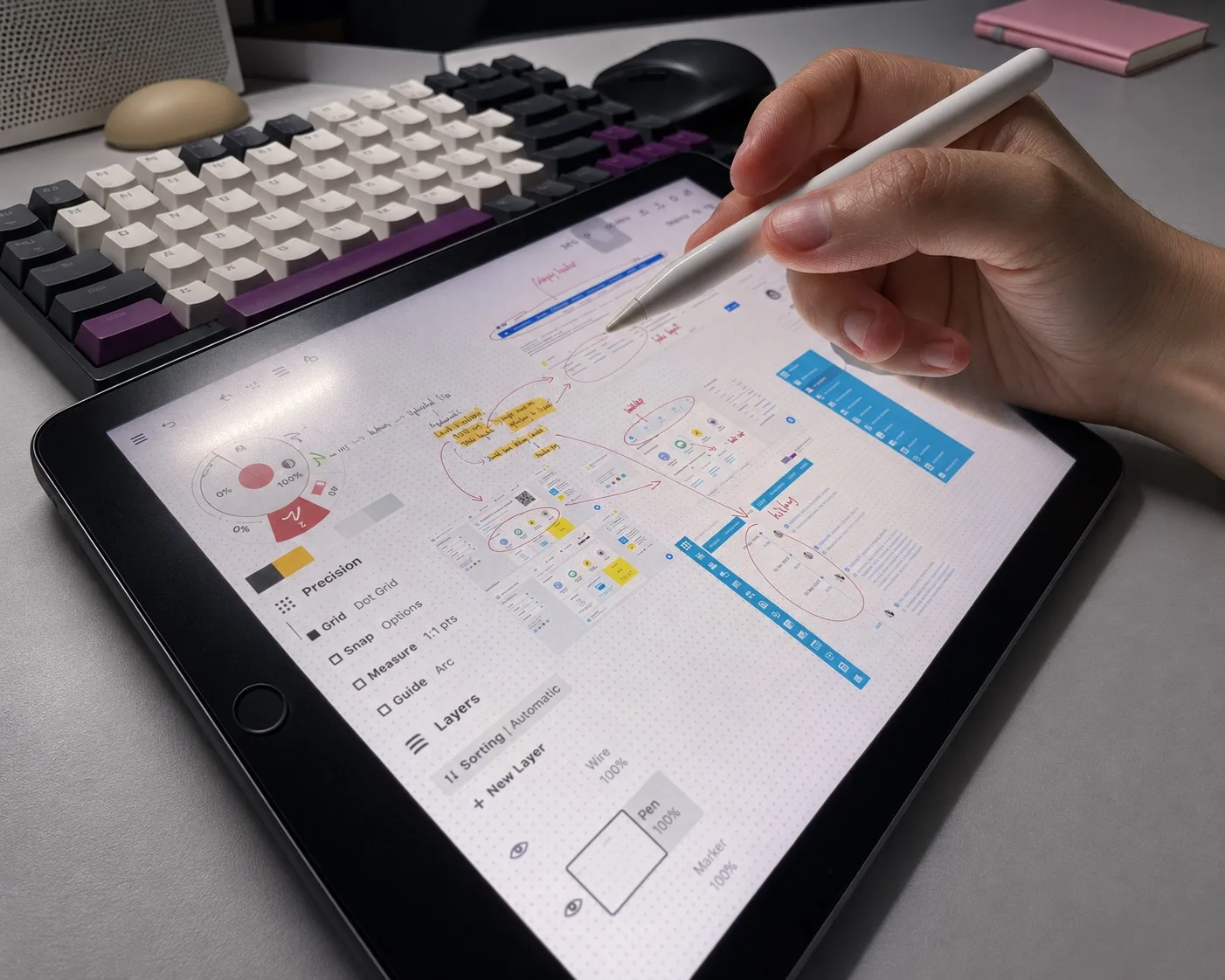
We map user journeys, information architecture and interface patterns. Prototypes can help stakeholders validate workflows before development begins.
Walk through a prototype with the staff or customers who will use it. Check whether they can identify the next action, understand errors and complete the job without unnecessary steps. Review navigation, labels, keyboard access and mobile use where those form part of the agreed scope.

The technical approach should fit the product’s needs, expected usage, integrations, data and future maintenance. We plan development in manageable stages and keep scope and decisions visible.
Agree the first release around an end-to-end task that can be tested, rather than a collection of unfinished screens. Record technical decisions, dependencies and changes as the work progresses. Hosting, backups, monitoring and future maintenance should be considered alongside the application itself.

Custom applications often need to exchange information with existing platforms. We assess API availability, data quality, permissions, vendor limits and error handling before committing to integration scope.
Before promising a connection, confirm which system owns each record and how it is matched elsewhere. Plan for failed requests, expired access and duplicate updates. If data must move from an old system, include a sample migration, validation checks and a route to recover if the transfer fails.
Consider testing, handover and the next steps as part of a clear delivery plan.

Testing should cover business workflows, permissions, data handling, error cases, performance expectations and agreed acceptance criteria. Stakeholder review helps confirm the system supports real work.
Ask the people responsible for the workflow to test realistic examples in an appropriate test environment. Include the wrong permissions, incomplete records and external services being unavailable. Record issues and agree which ones must be resolved before the release is accepted.

Launch planning may include environments, data migration, access, documentation, training and support arrangements. Ownership, licensing and source-code terms should be explicit in the project agreement.
A handover should make responsibilities clear: who can access the code and hosting, who looks after updates and backups, and how problems are reported. Agree migration, staff guidance and a launch checklist before switching a live process. Third-party licences and support terms need their own written scope.

A large system can often be approached in phases: start with a defined workflow or minimum viable release, validate it with users, then expand based on priorities and feedback.
Choose a starting workflow that has a clear owner and a measurable operational problem, such as repeated data entry or an approval backlog. After release, review real usage and unresolved exceptions before adding further departments or features. This keeps later work tied to evidence rather than assumptions.
Explore the supporting detail after reviewing the capabilities and project choices.
Custom software should make a difficult business process easier to run. We plan and develop tailored applications around your people, rules and existing systems, starting with the workflow that needs to change and a practical first release for your UK business.
Practical answers to help you compare options and prepare for a useful project conversation.
For teams relying on repeated spreadsheet work, disconnected tools or manual hand-offs that an existing product cannot reasonably handle.
Custom software development creates an application for the way your organisation actually works. Instead of adapting every process to a packaged product, we build the agreed records, screens, permissions and workflows around the tasks your staff or customers need to complete.
It may make sense when a critical workflow cannot be handled reliably through standard software or practical integrations. Begin with an assessment of users, exceptions, data ownership, approvals and long-term maintenance.
A configured platform adapts existing features, while custom business software is built around requirements that a product may not support. Compare fit, subscription costs, vendor restrictions, development expense and exit options rather than assuming bespoke is always better.
The main cost factors are user roles, complete workflows, system interfaces, migration and acceptance testing. Compare a focused first release with a wider build, and separate development from hosting, provider licences, usage and support. Share one representative task and your current systems so the estimate can state deliverables, assumptions and exclusions.
Often, if the spreadsheet has become a shared operational system. Bespoke web application development can introduce validation, permissions, audit trails and consistent reporting, but the underlying process should be simplified first.
For a startup, identify the smallest useful product, what must be proved, and which functions can be handled manually at first. Custom application development should support the test rather than recreate an entire enterprise system too early.
Integration may be more economical than rebuilding everything. Review API access, licence conditions, data formats and failure recovery before deciding whether a new application is necessary.
Business process software helps people complete a defined sequence of work, such as approving requests or processing orders. The design must account for unusual cases, missing information, delegation and an auditable record of decisions.
Ask for explicit assumptions, deliverables, integrations, acceptance criteria, change requests, security responsibilities, handover, ownership terms and support costs. A single headline figure without those details is difficult to compare.
Yes, but multi-team use brings role-based permissions, different local workflows and data consistency questions. Start with shared requirements and test exceptions from each branch before expanding access.
Agree discovery, design, implementation, acceptance testing and launch as separate stages. Content readiness, access to existing systems, approval turnaround and migration can change the schedule. Ask for dependencies, review dates and a delivery range in the written proposal; no fixed turnaround is implied before scope is reviewed.
Ownership, source-code access, hosting accounts, third-party licences, documentation and data exports should be specified in the contract. Do not rely on a verbal understanding at handover.
Potentially. A feasibility review should check available APIs, authentication, record matching, rate limits and audit requirements. Some vendor systems require approved connectors or do not allow the intended integration.
Yes. The scope can focus on a useful first outcome, with later work listed separately. Agree the deliverables, dependencies, acceptance criteria and handover for that phase before committing to development.
Tell us who uses the process, where work gets stuck and which systems it depends on. We can begin with the smallest useful change rather than an oversized feature list.
May we use Google Analytics to understand website visits and completed enquiries? It’s optional, and you can change your choice at any time.
Cookie information